AI is taking over the world, and not slowly, but with great speed. Be it any industry, there’s no domain left without AI assistance. There is no difference when it comes to customer support. While some appreciate AI’s efficiency, there are some who find it frustrating. And there’s no denial that this new technology has seen some setbacks as well. The mixed reception, therefore, raises an important question: do people truly hate AI in customer support, or is it simply a matter of execution?
Well, in this article we will go deep inside these questions and explore how AI entered customer service and how successfully it is ruling this field.
The Rise of AI in Customer Support
The integration of AI in customer support began as businesses sought faster and more efficient ways to handle customer inquiries. Traditional customer support relied on human agents, which meant long wait times and inconsistent service quality. With advancements in machine learning and natural language processing (NLP), AI-powered solutions were introduced to streamline support operations.
Companies initially used AI to manage FAQs, route queries, and automate simple tasks. As technology evolved, AI started handling more complex interactions, improving response times and reducing operational costs. However, customer reactions to AI-driven support have been varied, with some embracing its convenience while others express frustration over robotic and impersonal interactions.
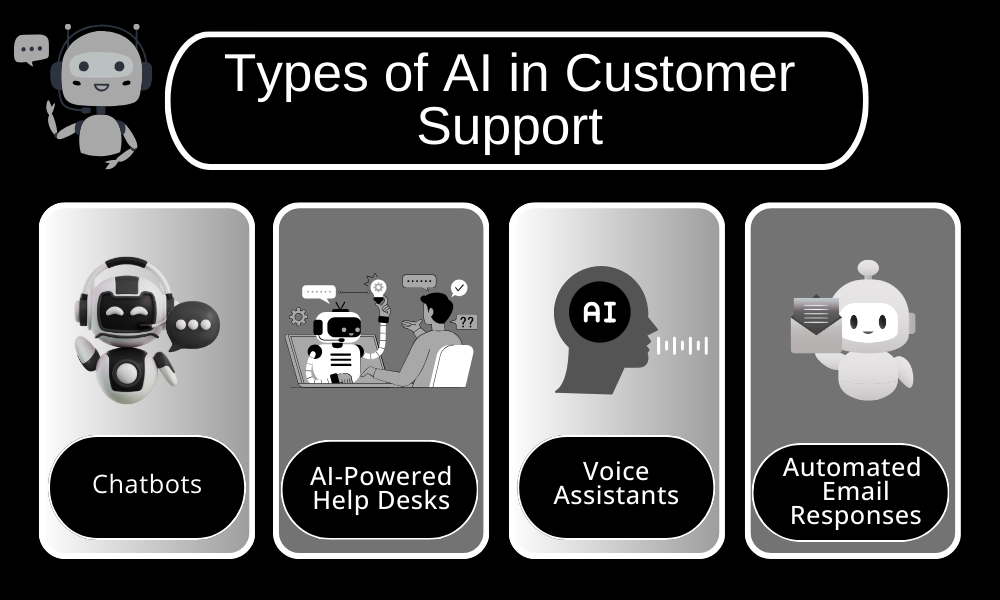
Types of AI in Customer Support
Chatbots
Chatbots are AI-driven programs designed to simulate human-like interactions with customers, providing instant responses and automated assistance across websites, mobile apps, and messaging platforms. Basic chatbots operate on predefined scripts, offering quick answers to frequently asked questions (FAQs) and handling routine inquiries, though they struggle with complex requests.
In contrast, AI-powered chatbots utilize natural language processing (NLP) and machine learning to understand context, recognize user intent, and continuously improve their responses. These advanced chatbots can troubleshoot issues, guide users through processes, and even facilitate simple transactions, making them a valuable tool for enhancing customer support and engagement.
Voice assistants
Voice assistance such as Siri, Alexa, and Google Assistant enable hands-free interaction by recognizing and processing voice commands. These AI-driven tools assist users with tasks like checking order statuses, scheduling appointments, and providing product information, making them particularly beneficial for those who prefer verbal communication over typing.
However, despite their convenience, voice assistants may struggle with understanding different accents, speech patterns, or industry-specific jargon, which can sometimes lead to misinterpretations and inaccuracies in responses.
AI-powered help desks
Leverage machine learning algorithms to analyze customer queries and provide relevant solutions, streamlining the support process. These systems assist human agents by suggesting responses, significantly reducing the time spent searching for solutions. Additionally, AI can automatically categorize tickets based on urgency, sentiment, and complexity, ensuring that critical issues receive priority attention.
While AI-powered help desks enhance efficiency and improve response times, they still depend on human agents for handling nuanced and highly technical issues that require deeper expertise and critical thinking.
Automated Email Responses
AI-powered email automation enables businesses to respond to customer inquiries more quickly and efficiently by categorizing and prioritizing emails, ensuring urgent queries receive prompt attention. These systems generate automatic replies based on the context of the inquiry, significantly reducing response times. Advanced AI can even draft personalized responses for human agents to review before sending, maintaining a balance between speed and human oversight.
However, while automation enhances efficiency, some customers may find AI-generated responses impersonal, particularly when seeking customized support or assistance with complex concerns.
Pros and Cons of AI in Customer Support
Pros:
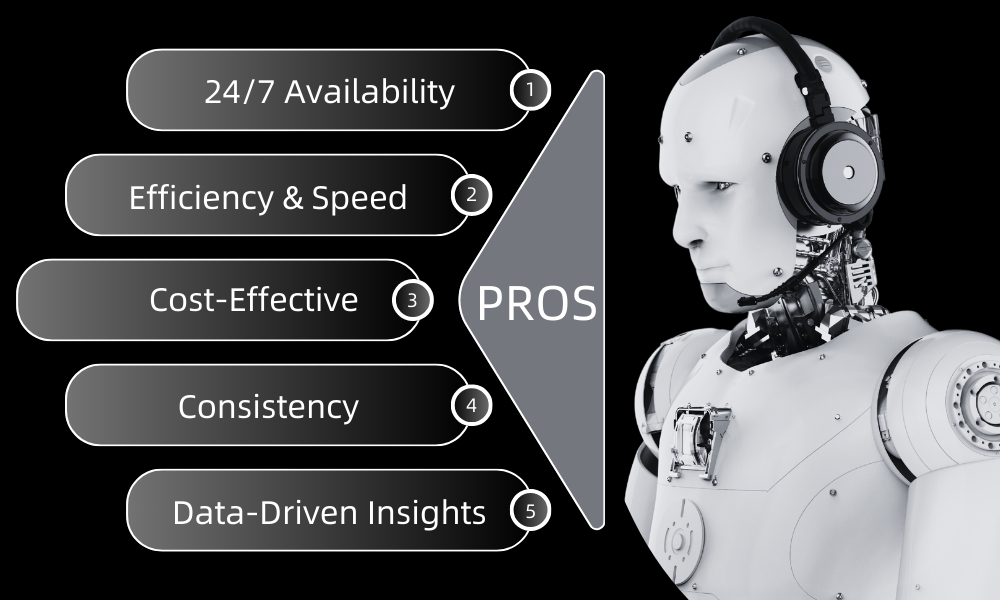
- 24/7 Availability: AI-powered support systems can provide assistance round the clock, eliminating wait times during peak hours.
- Efficiency & Speed: AI can process large volumes of queries simultaneously, reducing response times and improving productivity.
- Cost-Effective: Businesses can save on hiring and training costs, making AI a financially viable alternative to human support.
- Consistency: Unlike human agents, who may provide varied responses, AI ensures standardized and accurate answers to common questions.
- Data-Driven Insights: AI analyzes customer interactions to provide businesses with valuable insights, helping them refine their support strategies.
Cons:
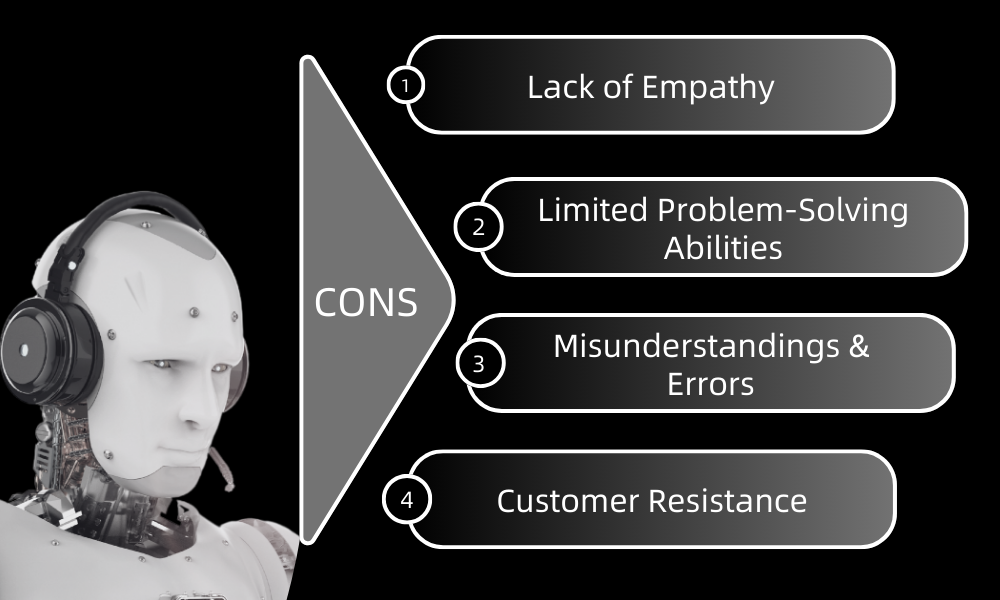
- Lack of Empathy: AI cannot replicate human emotions, making interactions feel cold and robotic, which can frustrate customers seeking a personalized experience.
- Limited Problem-Solving Abilities: While AI handles basic inquiries well, it often struggles with complex issues that require human intuition and critical thinking.
- Misunderstandings & Errors: AI-driven systems may misinterpret customer queries, leading to incorrect responses or unresolved concerns.
- Customer Resistance: Many customers still prefer speaking with human agents, especially for urgent or sensitive issues, leading to dissatisfaction with AI-based interactions.
The Verdict: Hate or Acceptance?
Customer sentiment towards AI in customer support depends on the execution. When AI is used effectively, such as providing quick resolutions for common queries while allowing seamless escalation to human agents, customers appreciate its benefits. However, when AI replaces human interaction entirely or fails to understand nuanced issues, frustration builds.
Businesses must strike the right balance, using AI to enhance, not replace, human support. By implementing hybrid models where AI assists human agents rather than acting as a sole point of contact, companies can offer a customer experience that combines efficiency with empathy.
Ultimately, people don’t necessarily hate AI in customer support; they dislike poor implementations of it. The key lies in using AI strategically to improve service without compromising customer satisfaction.
Checking out services who could train your AI with accuracy? Let us shoulder your responsibility!
We are Trupp Global, an expert of managing data for training AI and ML with our Data Annotation Services. Look no further, and contact our experts today. Outsource Data Annotation Services with us.